
The tenant left their stuff after the eviction. Now what?
The constable changed the locks at ten in the morning. By noon I am standing in a house that still has a sofa, two dressers, a TV, a bicycle and about fifteen boxes in it, and the dumpster company says they can drop a container this afternoon. That is the most tempting call to make after an eviction, and it is the wrong one. Here is what I do instead.
I have run my own rentals in central Pennsylvania since 2020, thirteen units across three duplexes, a triplex and a quad. After an eviction most landlords feel like the hard part is over. Legally, a lot of it is. But the things the tenant left behind are still the tenant's things. Many states require a written notice and a waiting period before a landlord can get rid of them, and the landlord who hauls it all to the curb the same day can end up paying the tenant for what it was worth, plus whatever else a court adds. A sofa and a TV are cheap. Being sued over them is not.
The tenant on this page is a composite I will call Wade, and the screenshots are from a demo house in my own account, but the steps are the ones I follow. Wade stopped paying, the case went through the magistrate, and the lockout happened on October 19. The house was not empty.
What I do between the lockout and the dumpster
1Lockout day: the timeline tells me the case is not over yetInvestor plan
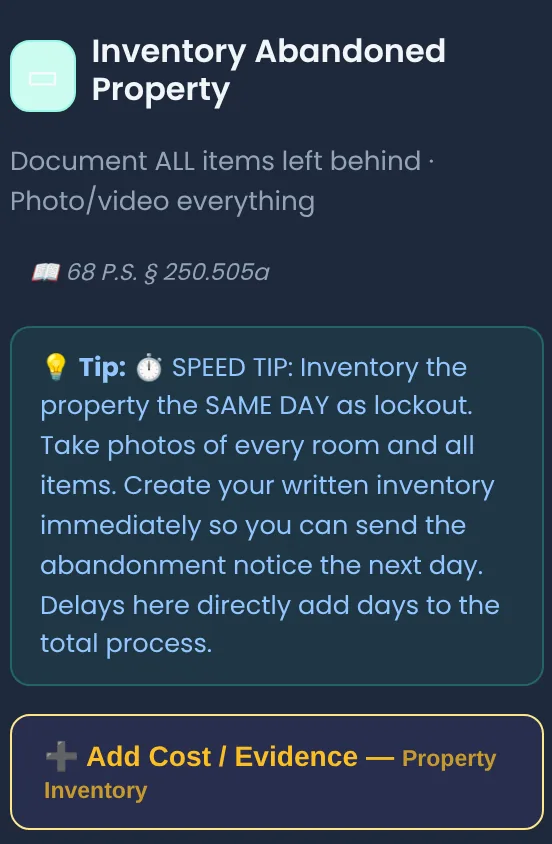
I keep every eviction on the timeline in LandlordPro, and I type in each date as it happens: the day the notice was served, the day I filed, the hearing, the judgment, the order for possession, and the lockout. On October 19 the last green box says Lockout, Completed. The next box is not "turn over the unit." It is Inventory Abandoned Property, and the panel says to do it the same day: photos of every room and every item, and a written list, so the notice can go out the next day.
That one box is the reason I do not call the dumpster company on lockout day. The timeline is a guideline, not a lawyer, and it says so at the bottom of every screen. But it puts the step I am most tempted to skip right where I can see it.
2The written notice, with my state's claim period filled inPro plan
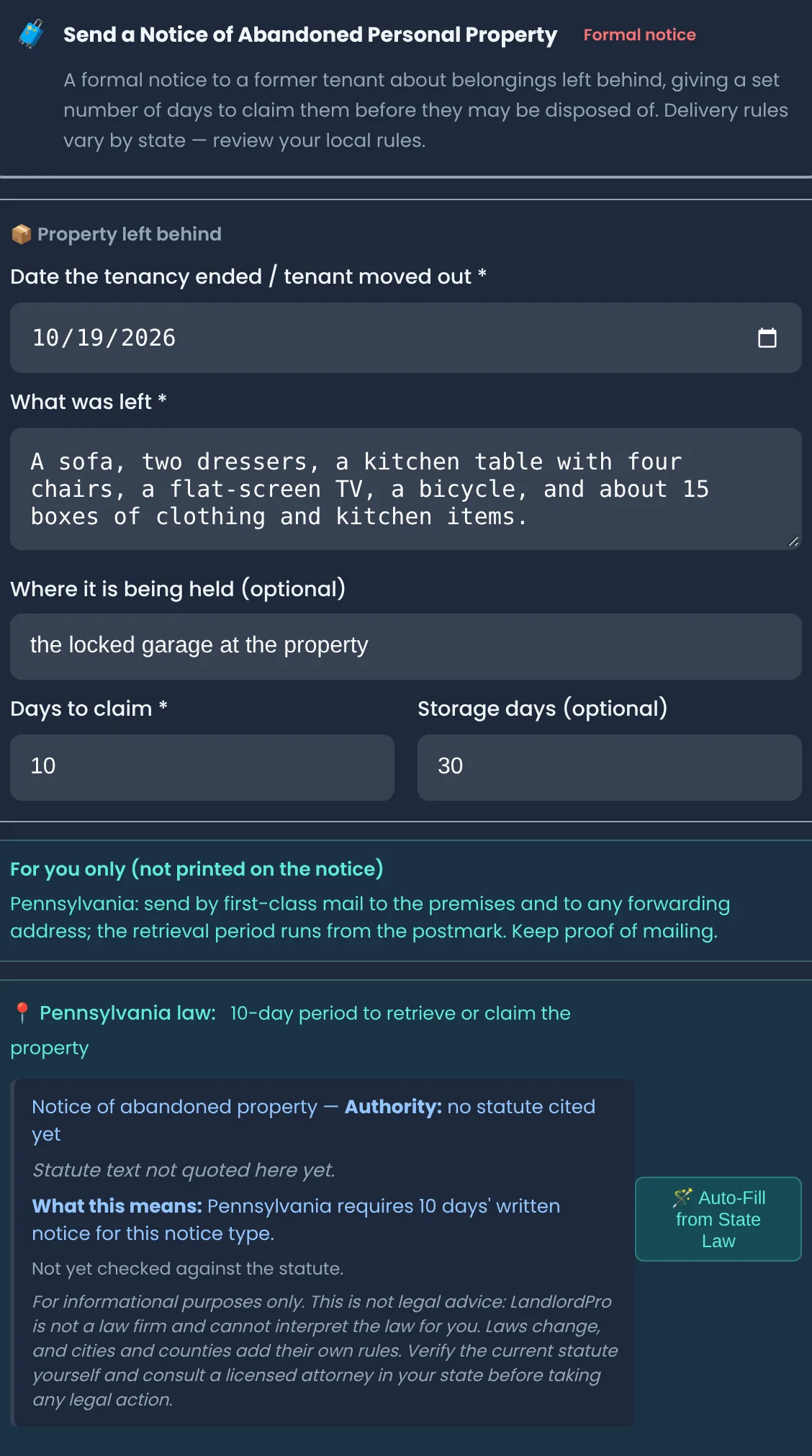
The notice is under New Notice, "I want the tenant to move out," Send a Notice of Abandoned Personal Property. I fill in the date the tenancy ended, a plain list of what was left (a sofa, two dressers, a kitchen table with four chairs, a flat-screen TV, a bicycle, about fifteen boxes of clothing and kitchen items) and where it is: the locked garage at the property. Then Auto-Fill from State Law fills in the numbers. For a Pennsylvania property the app uses 10 days for the tenant to claim the property and 30 days of storage. Your state's numbers may be different, and the law changes, so check your state's current rule before you rely on any app, including mine.
Two things on that screen are for me, not the tenant. One says how the app thinks a Pennsylvania notice like this goes out: first-class mail to the unit and to any forwarding address, with the clock running from the postmark, and keep proof of mailing. The other is honest about its own limits: no statute cited yet, not yet checked against the statute, verify it yourself. I like that it says so. I save it as a draft and nothing goes anywhere yet.
For informational purposes only. This is not legal advice: LandlordPro is not a law firm and cannot interpret the law for you. Laws change, and cities and counties add their own rules. Verify the current statute yourself and consult a licensed attorney in your state before taking any legal action.
3Photos of everything, attached to the notice itselfPro plan
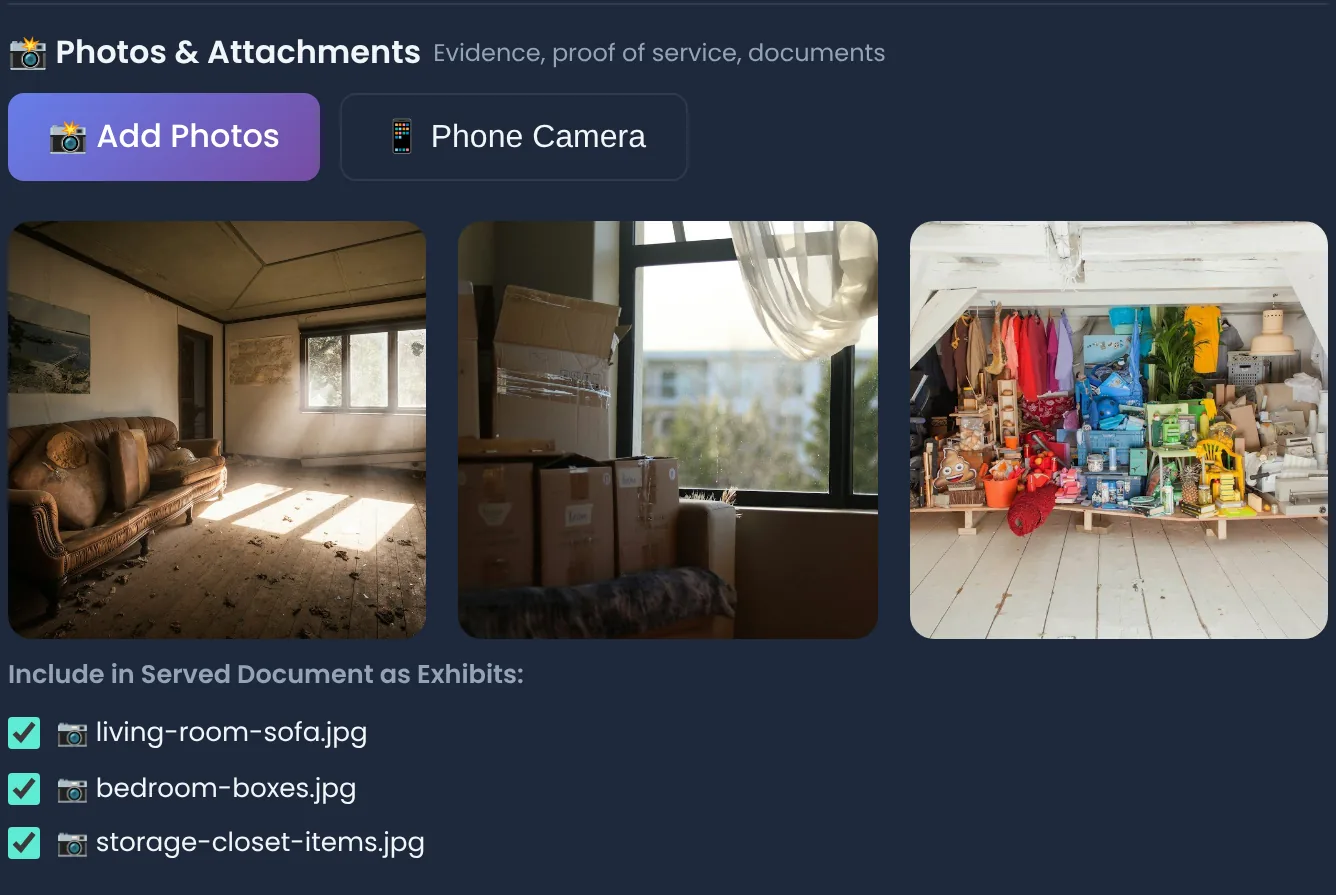
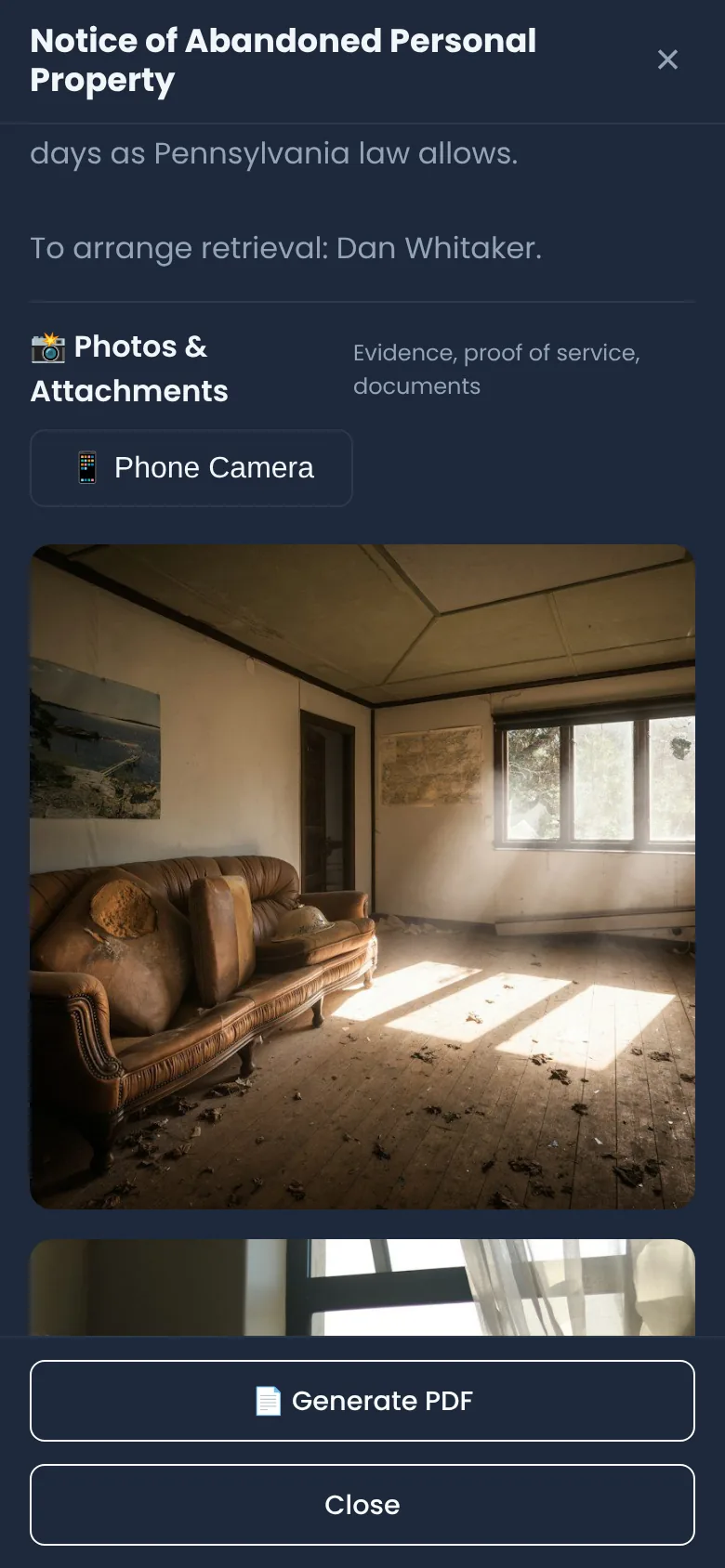
Before anything gets moved to the garage, I walk the house with my phone and photograph every room and every pile, the way it was when the constable left. Those photos go on the draft notice under Photos & Attachments. They are filed as evidence on that notice, and under each one there is a box to include it as an exhibit in the served document. I tick all of them.
This is the part that protects me later. If Wade says there was a $2,000 TV and a gaming PC in there, I have photos dated the day of the lockout and a list that matches them. If something of value is in the pile, I can see it now, before anything gets thrown in a truck. One small thing I learned: the app shows each photo by its file name, so I name the files for the room they were taken in.
4Read the draft before it is a notice
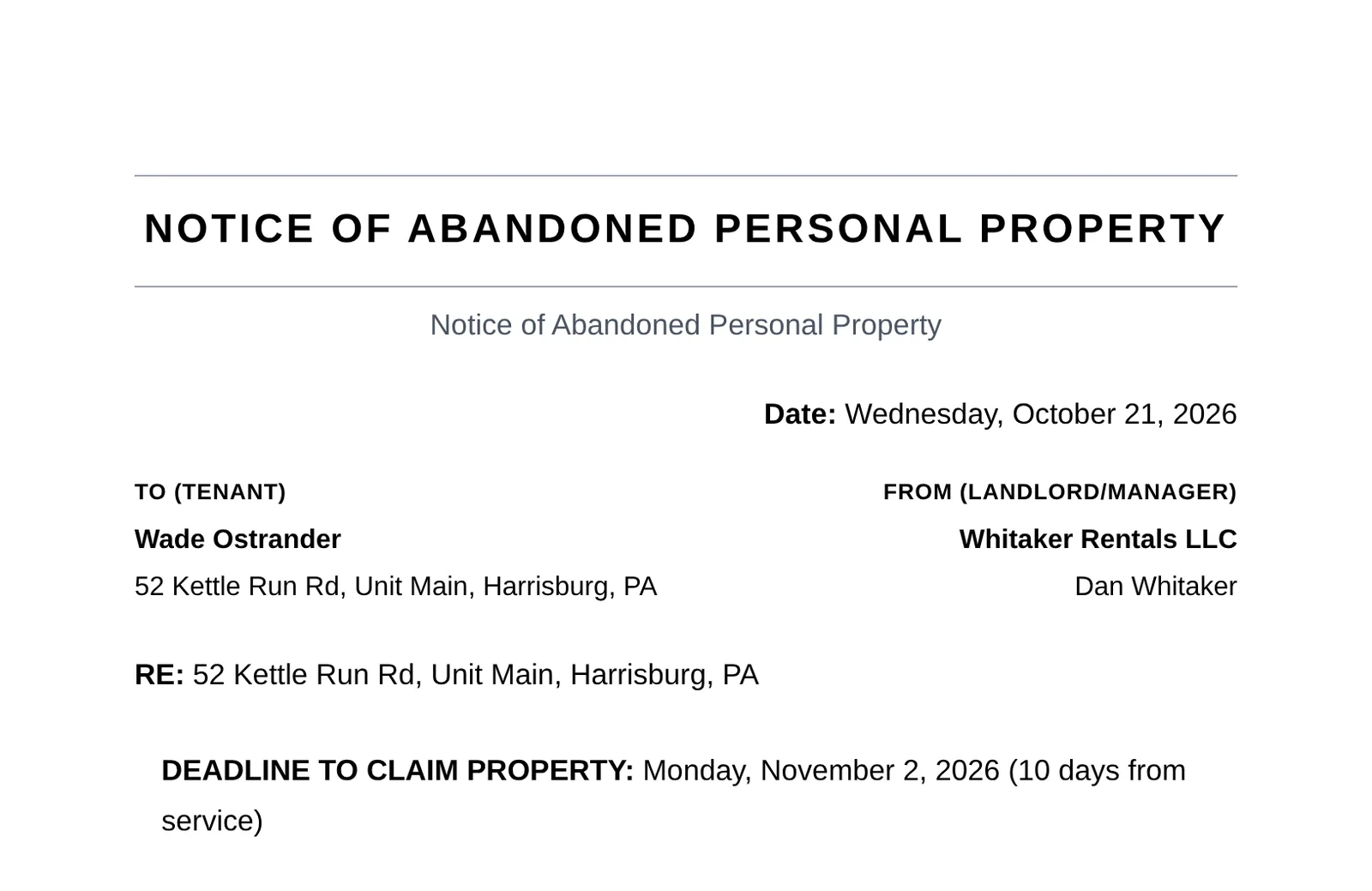
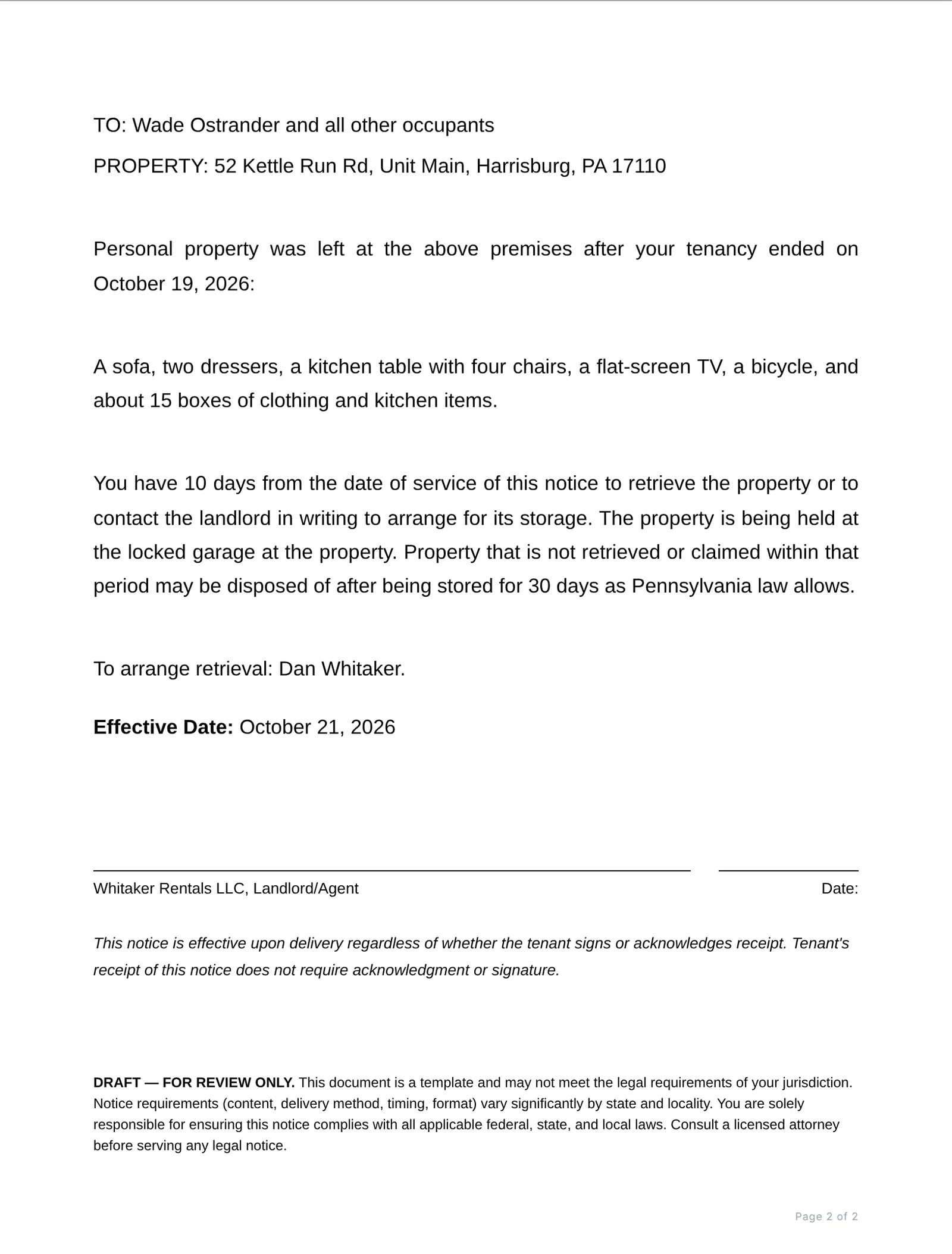
Generate PDF turns the draft into the actual notice, stamped DRAFT. The top of it says, in bold, the deadline to claim the property. The app counts it the way it explains on screen: the day the notice is delivered does not count, day one is the next day, and when day ten lands on a weekend it moves to the next business day. That is how a notice dated October 21 ends up with a deadline of Monday, November 2.
Under that is the list, where the things are being held, the 10 days to claim them, the 30 days of storage, and who to contact to arrange a pickup. I read every line. Nothing is served until I sign it, and when I do, the Sign & Serve screen asks what day it actually went out and recalculates the dates from that day. Until then it is a draft, and in this demo it stays one.
For informational purposes only. This is not legal advice: LandlordPro is not a law firm and cannot interpret the law for you. Laws change, and cities and counties add their own rules. Verify the current statute yourself and consult a licensed attorney in your state before taking any legal action.
5One bundle with the case, the notices and the photosInvestor plan
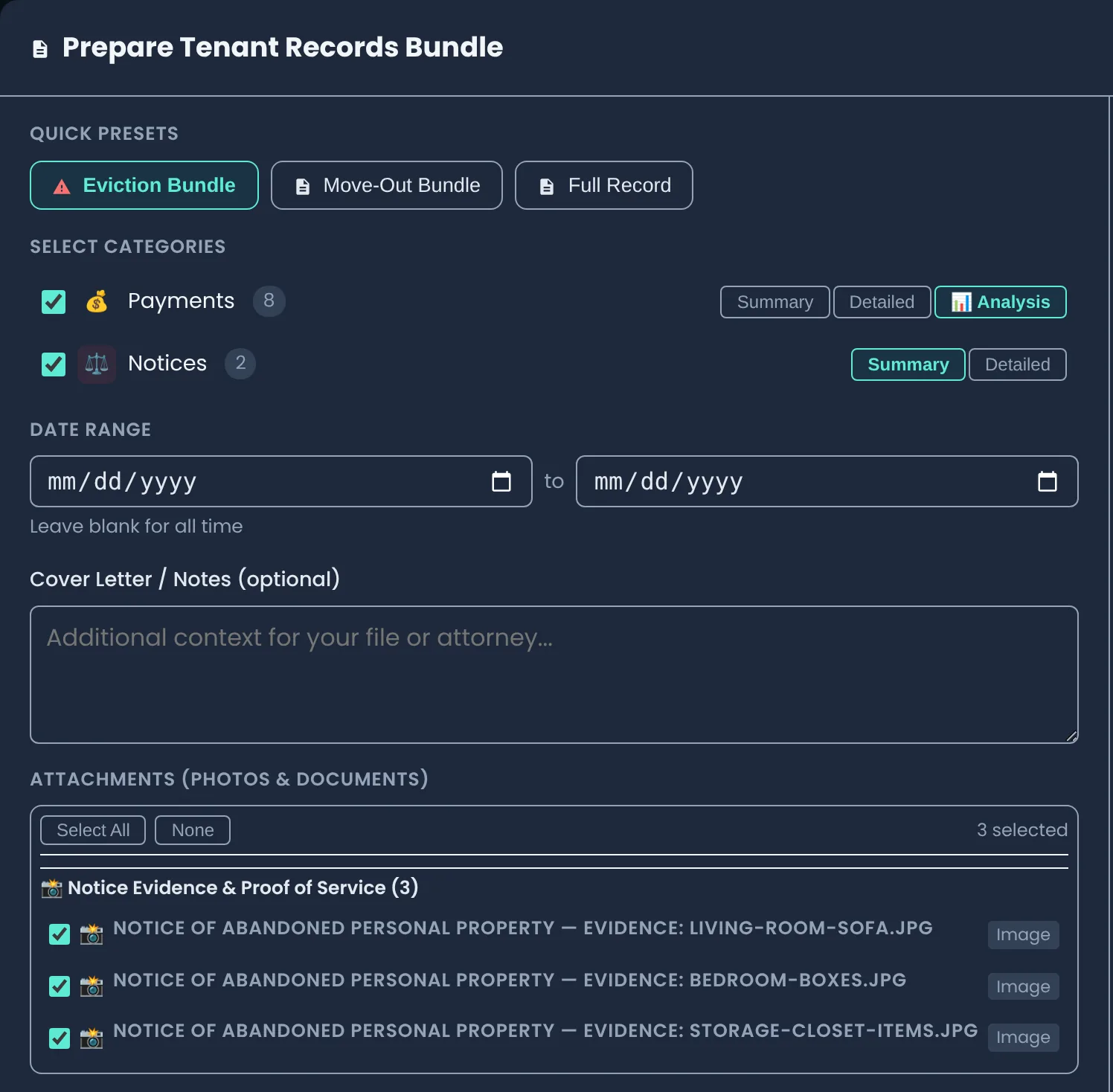
When the claim period runs out, or if the tenant calls a lawyer instead of a moving truck, I want one file that tells the whole story. The tenant records bundle pulls the payments and the notices, and under Attachments it lists every photo filed on the abandoned property notice. The Eviction Bundle preset starts with the photos unticked, so I click Select All.
That file plus proof of mailing is what I would hand an attorney or a magistrate: here is the lockout date, here is everything that was left, here is the notice and the date it went out, here is how long I held it. Whatever happens to the sofa after that, there is a record of how I got there.
What this looks like from my phone
Lockout day happens at the property, not at my desk, so this has to work on the phone. The draft notice opens there with its photos, and I can check what is on file while I am standing in the garage counting boxes.
If you take one thing from this page: the eviction ends the tenancy, not the tenant's ownership of their things. Write down what was left, photograph it, send the notice your state requires, and wait out the claim period before anything goes in a dumpster. It costs a couple of weeks of garage space. Skipping it can cost a lot more.
Honest note on plans: notices and the photos on them are on the Pro plan; the eviction timeline and the tenant records bundle are on the Investor plan. LandlordPro is software, not a law firm. Notice periods, storage rules, delivery rules and what you may do with unclaimed property vary by state and change; check your state's current law or ask a local attorney before you move or dispose of anything.
Questions landlords ask about this
Can a landlord throw away a tenant's belongings after an eviction?
Usually not right away. Many states require the landlord to give the former tenant written notice and a set number of days to claim the property, and some also require the landlord to store it for a period before disposing of it. Throwing things out early can make the landlord liable for their value. The rules vary by state and sometimes by city, so check your state's law or ask a local attorney first.
How long do I have to keep a tenant's belongings after an eviction?
It depends on the state. For a Pennsylvania property LandlordPro uses 10 days for the tenant to claim the property and 30 days of storage. Other states use shorter or longer periods, and some count from the day the notice is mailed. Check your state's current law before you rely on any number, including the app's.
Do I have to send the tenant a notice about property left behind?
In many states, yes, and the notice usually has to say what was left, where it is, how long the tenant has to claim it and how to arrange a pickup. States also differ on how it must be delivered, for example by first-class mail to the unit and to any forwarding address. Keep proof of mailing either way.
What should I do with the tenant's things during the claim period?
Photograph everything where it was left, make a written list, and store it somewhere secure, such as a locked garage or a storage unit. Allow reasonable access if the tenant contacts you to pick it up. Some states let a landlord charge reasonable storage costs and some do not, so check your state's rules.
Can I sell the tenant's property after the claim period?
Some states allow a landlord to sell unclaimed property and apply the proceeds to what the tenant owes or to storage costs, sometimes with rules about notice of the sale or what happens to any leftover money. Others allow disposal. This is one of the most state-specific parts of landlord law, so ask a local attorney if anything of real value is involved.
What if the tenant comes back for their things after the deadline?
Once the claim period in your state has passed and you have followed its notice rules, you are generally allowed to handle the property as the law and your notice say. Until you have actually disposed of it, letting the tenant pick it up is usually the simplest way to end the matter. If you are unsure whether the deadline has really passed, check with a local attorney before refusing.
Run your rentals the way this page shows
LandlordPro is free for up to 4 units — the rent roll, reminders, notices and the records bundle included. No card to start.
Start freeFor informational purposes only. This is not legal advice: LandlordPro is not a law firm and cannot interpret the law for you. Laws change, and cities and counties add their own rules. Verify the current statute yourself and consult a licensed attorney in your state before taking any legal action.